

Picture a regional general manager who has done most things right. She has hired well. The strategy for the region is sound. Her direct reports are capable people who work hard. And for most of the year, results have been flat.
It is a common spot to be in, and a frustrating one, because there is nothing obvious to fix. Nobody is underperforming. There is no single bad decision to point at. So the usual responses kick in: a restructure, a new dashboard, another offsite to refresh the strategy.
Very often the problem sits somewhere else. Each leader on the team is executing in their own way.
Five leaders, five methods
Look closely at how the leadership team works and the pattern shows up. The sales lead plans in detail but rarely briefs the team on the plan. The operations lead runs a tight weekly meeting and never looks back at what went wrong. Finance runs post-mortems, but only when a number is missed, and they turn into a hunt for whoever caused it. Every leader has a method. None of the methods match.
The cost shows up in the joins. When sales commits to a customer date, operations finds out late. When a project slips, nobody debriefs it across teams, so the same handover fails again the next month. Each leader is doing a decent job inside their own patch while the work between the patches keeps falling over.
One method across the leadership team
The fix in a situation like this is rarely a new strategy. It is a shared way of executing the one you have. In a fighter squadron, every pilot runs the same loop on every mission: plan, brief, execute, debrief. Any two pilots can fly together and know exactly how the mission will run.
For the regional leadership team, putting that loop in place looks like this:
- Plan together. Each quarter starts with one objective for the region and a plan the whole leadership team builds, with an owner for every piece and the risks named up front.
- Brief across functions. Before major pieces of work, the people affected get briefed together, so sales, operations and finance hear the same thing at the same time.
- Execute against the plan. Weekly check-ins look at progress toward the regional objective rather than each department’s activity.
- Debrief everything. Wins and misses, using the four questions of objective, result, cause and action. Nameless and rankless, with the general manager going first.
What tends to change
The first few debriefs are usually uncomfortable. Leaders are used to defending their area, and it takes a few rounds of the most senior person owning her own mistakes before the others follow. Once they do, the conversation shifts. The causes that come out are almost always in the joins between teams, and most of them are fixable.
Over time the leadership team starts speaking the same language. A plan means the same thing to everyone. A brief happens before work starts instead of after it has gone wrong. Problems come up in a weekly debrief instead of a quarterly review. The people around the table are the same ones as before. They are simply working the same way.
Where to start
If this sounds familiar, start with a debrief of the last quarter with the whole leadership team in the room. Run the four questions honestly. If most of the causes you find sit between functions, your issue is method rather than talent.
Next step
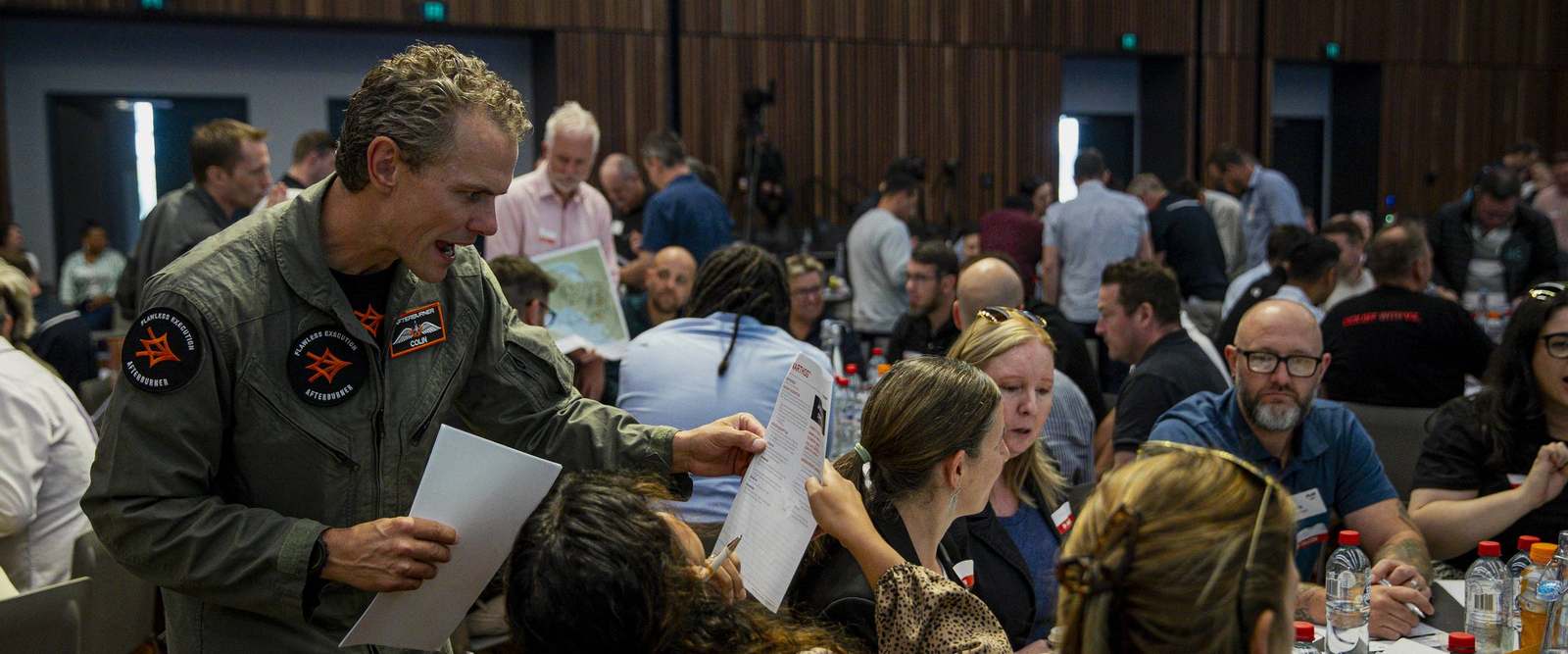
Our CEO Keynote, delivered by Matt Hall, is built for leadership teams and executive offsites. For teams that want to practise the method together, the Top Gun Experience adds hands-on mission workshops at their own tables.
“Afterburner [brought] six days of intensive training together into a final experiential program for over 100 Store Executive Managers focused on leadership, planning and debriefing the daily operations of this billion dollar organisation.”The Good Guys
Send us your date, audience size and the outcome you want, and we’ll recommend a format and send a written fee range within one to two business days.
← All articles